
I may earn a commission if you click on links in this post and make a purchase.
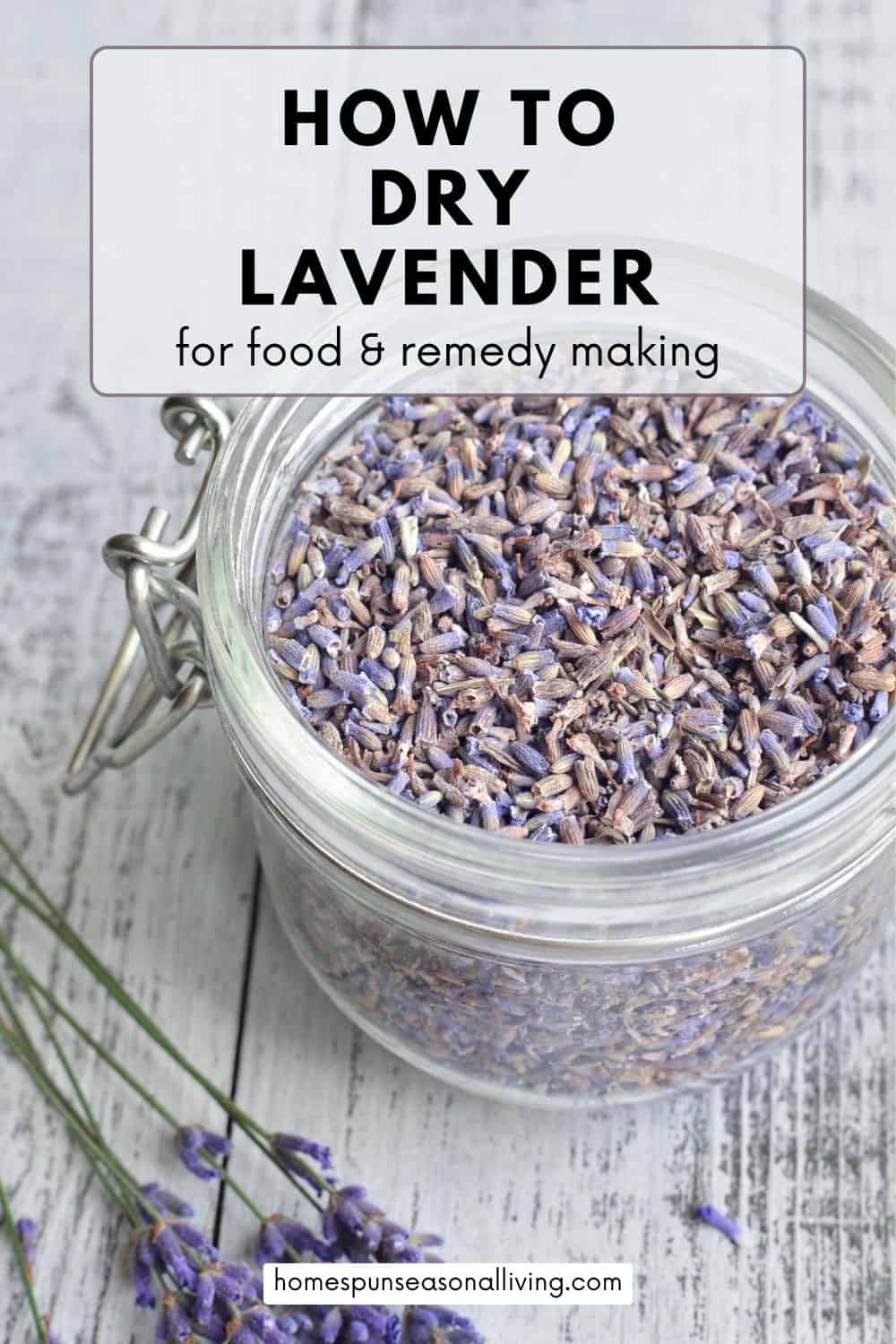
Lavender has been growing in my garden for going on 15 years, and every July I cut it back, bundle the stems, and hang them to dry in the kitchen. It’s one of those tasks that feels more like a ritual than a chore at this point. Once it’s dry, a single jar of lavender buds goes a long way — into baked goods, honey, bath salts, sachets, and more, all through the year.
Here’s how to harvest and dry lavender at home, plus a handful of ways to put it to use once it’s ready.
How to Harvest Lavender
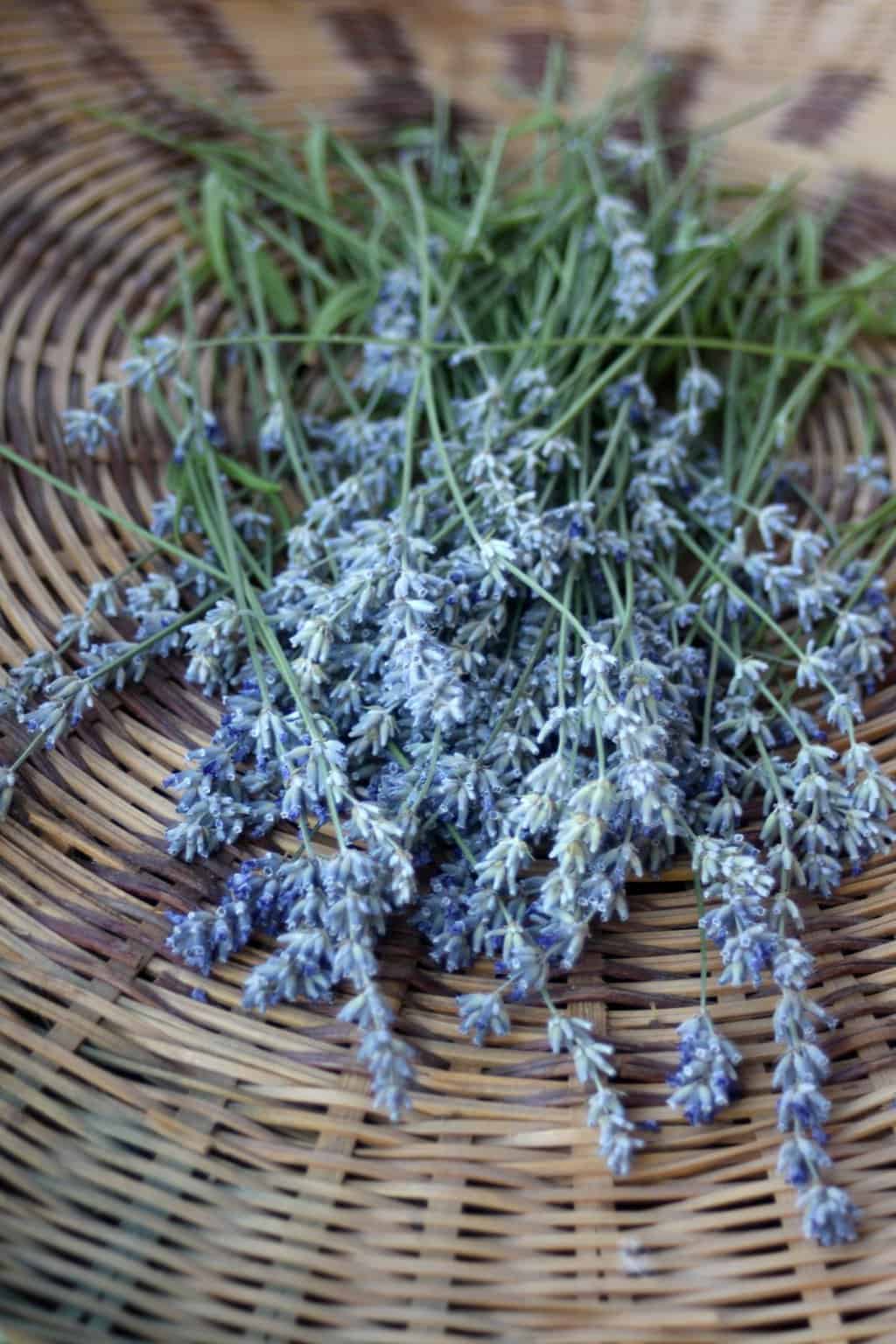
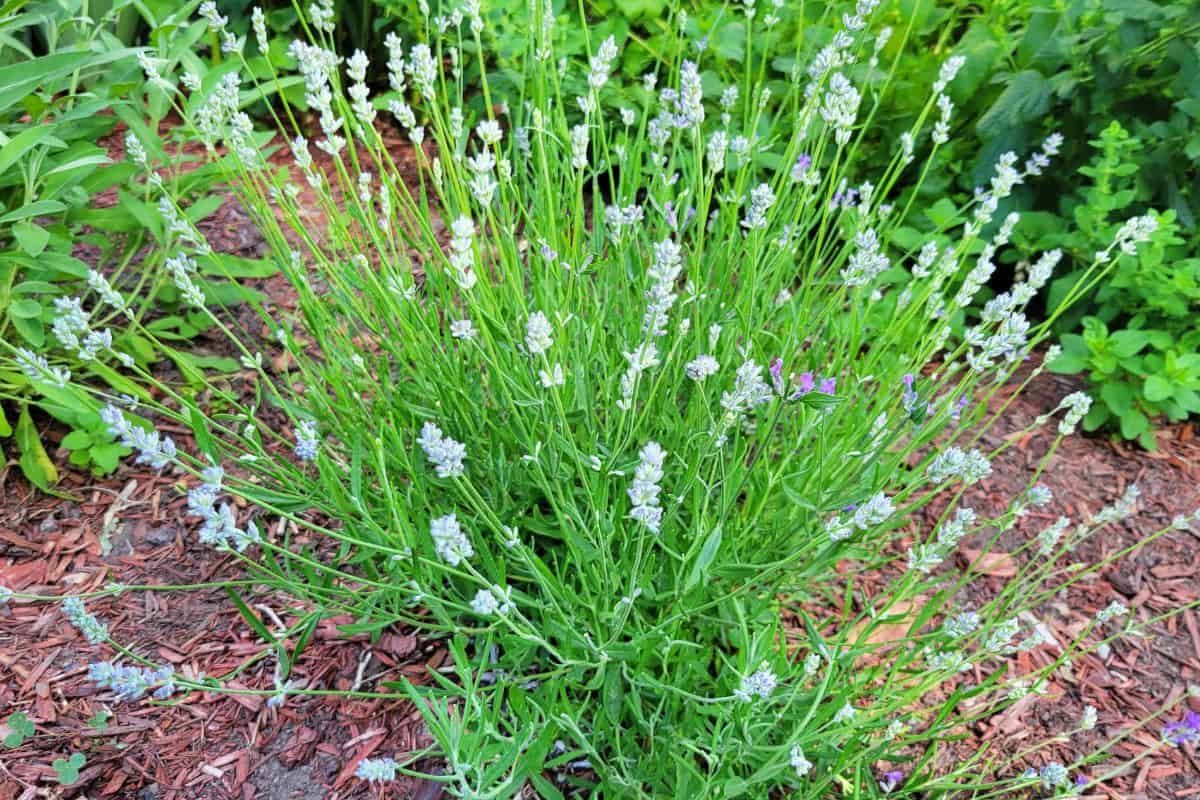
Gather stems of lavender when the flowers have started to bud but the buds have not opened.
You could dry some of the flowers when they’ve opened but in most culinary and even home remedy uses, it is the buds that are used.
Cut the stems about 1 inch from the ground and place them into a basket and bring them into the kitchen.
While not required, it is incredibly helpful to keep the stems pointing in the same direction in your harvest basket. This way when you tie them into a bundle all the buds are on the same end.
Rinse & Dry the Stems
Remove any surface dirt or insects by giving the stems a quick rinse under running cold water.
Give the stems a good shake over the sink to remove excess water. A gentle squeeze doesn’t hurt either.
Spread the stems out onto a towel to let any other moisture evaporate. This should take just a couple of hours at most. Once the stems and leaves are dry of surface water, it is time to proceed with the dehydration process.
How to Dry by Hanging
One of the easiest ways to dry herbs is simply to tie them in bunches and hang.
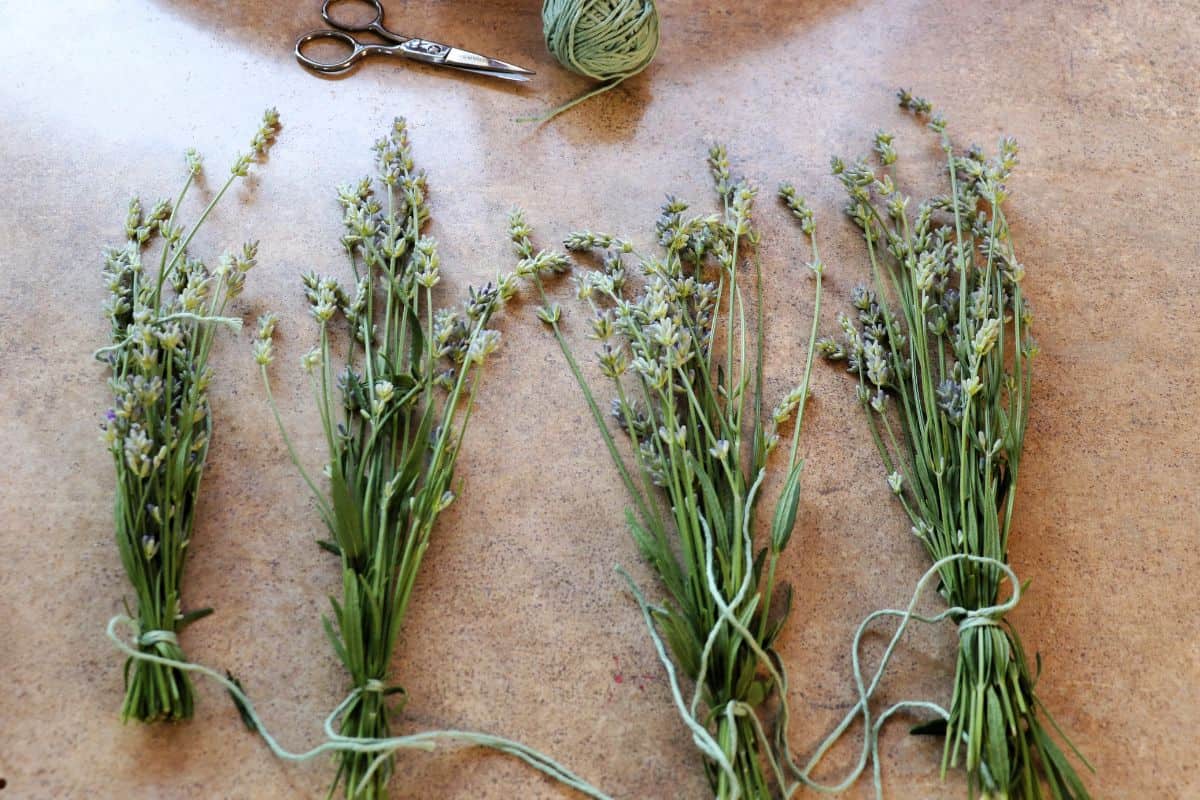
Grab a handful of stems, about 10 total, so that the cut ends all line up at one end of the small bunches.
Tie some twine or leftover yarn around the end of the stem. You can even use a rubber band to hold the bunches together. Tie it very tightly, as the stems will shrink as they dry and can slip out.
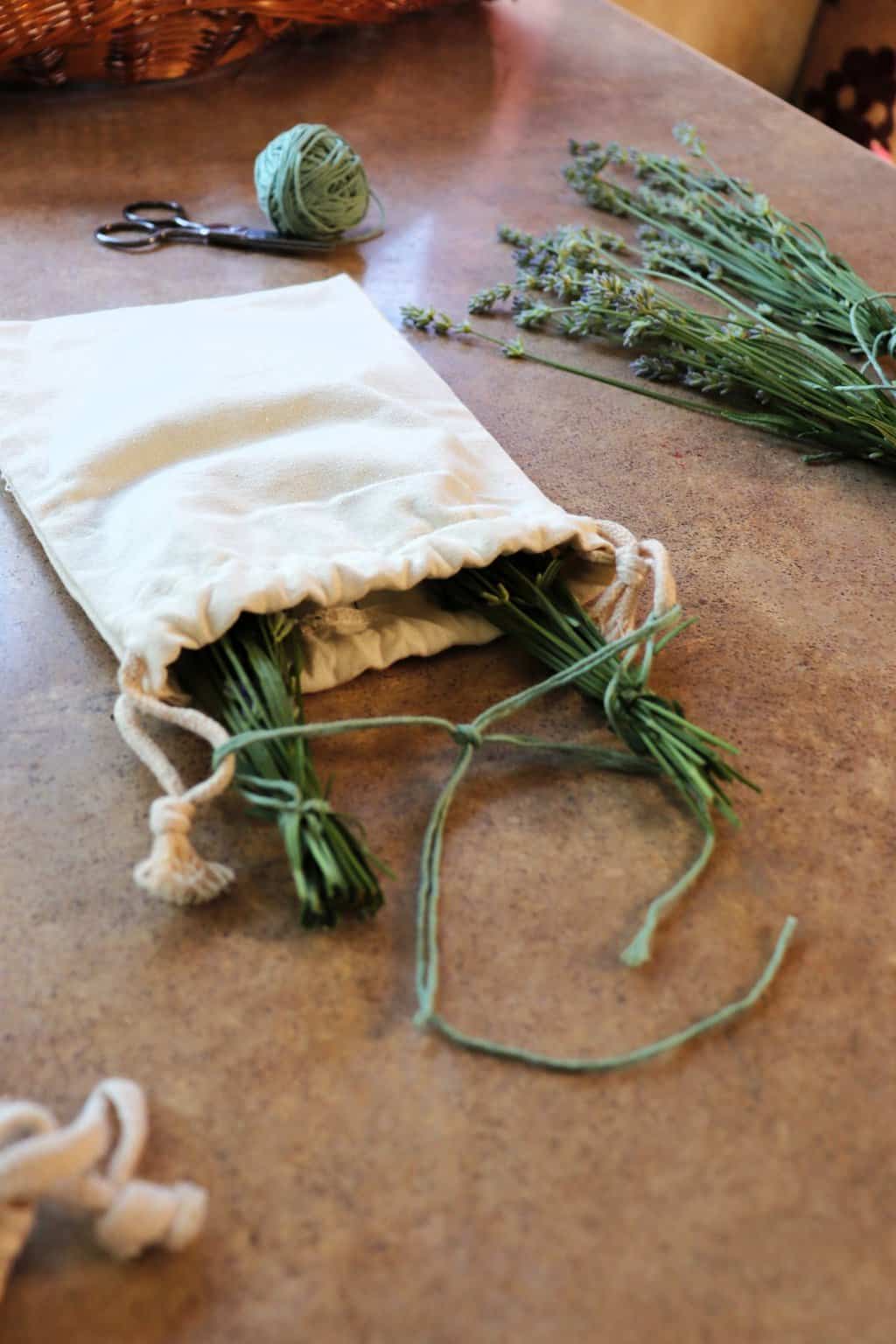
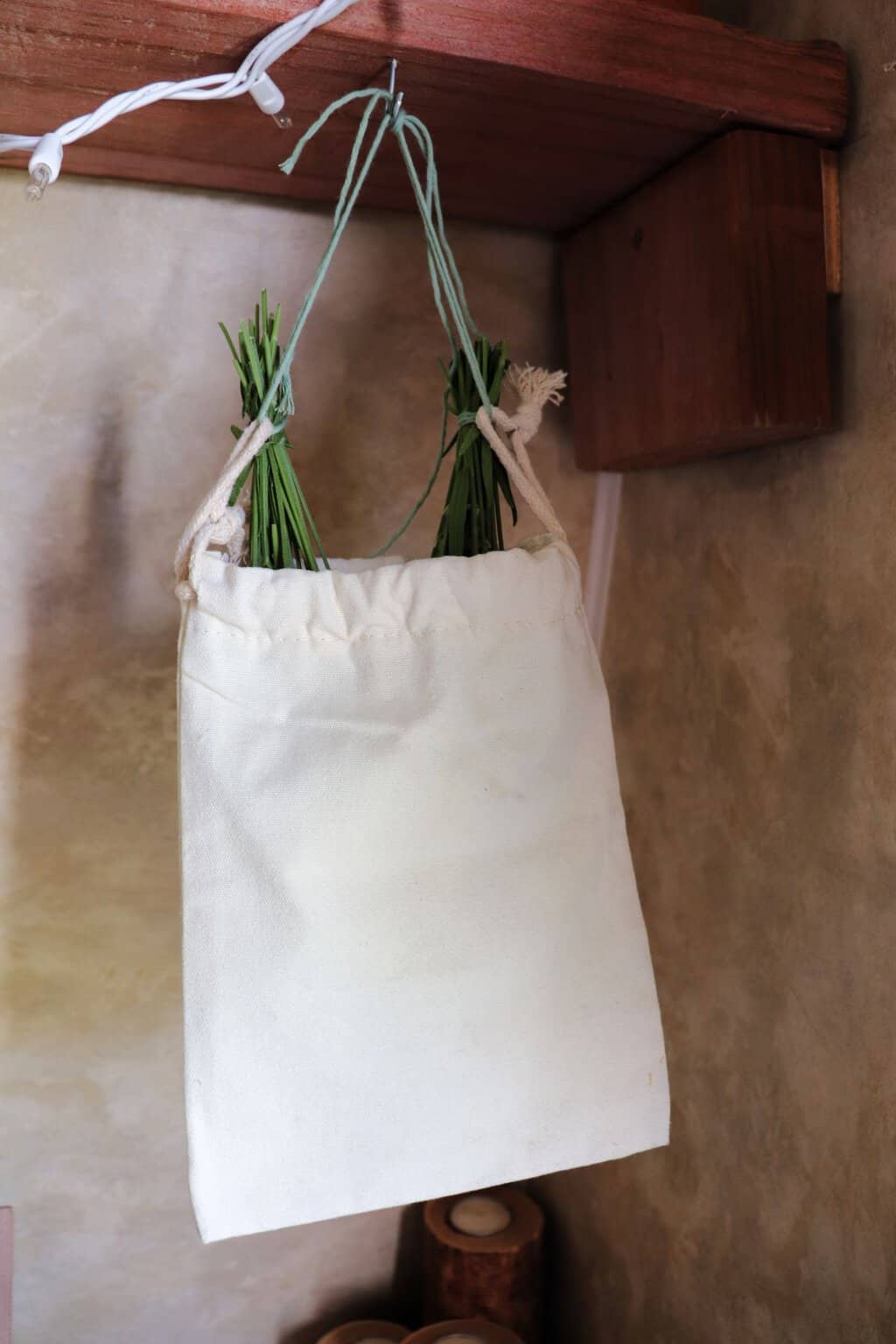
The thing about hanging lavender is that sometimes the buds will slip out of the stems as they dry. To keep the corralled I put the tied bundles into cloth bags before hanging them up. This way if any buds do slip out they are contained in the bag for my use rather than spilling onto the floor.
Hang the bunches on a hook or over a hanger in a space that is out of direct sunlight and has good air circulation.
Let hang until crispy and dry. Just exactly how long this air-drying method will take depends on your climate. Warmer and dryer will dry more quickly than humid and cool for example.
If you live in a particularly humid climate, it may take too long to dry this way and the herbs may actually mold instead. Consider using the oven or dehydrator instead.
How to Dry in the Oven
Preheat the oven to 170 degrees Fahrenheit. Line a baking sheet with parchment paper.
Spread the lavender stems out onto the baking sheet in a single layer.
Place the baking sheet in the preheated oven and bake for 1 hour. Check the buds and leaves and make sure they are crispy dry. If the leaves aren’t completely dry, continue the drying process in the oven and check every 10 minutes. Remove from the oven when they are completely dry.
Let cool completely on the baking sheets.
How to Dry in the Dehydrator
If you have a food dehydrator with a fan, like an Excalibur, just know that once the lavender dries it may blow around the dehydrator. Not necessarily bad, just a little messy.
Spread the stems out on the dehydrator trays in a single layer and place trays in the dehydrator.
Turn the dehydrator to the lowest temperature and close the lid. Let the dehydrator run until the leaves and buds are crispy and dry. Check after 1 hour and then every 15 minutes after, the amount of time until fully dry will again depend on your dehydrator and climate.
Removing the Buds and Leaves
If the stems were tied together to dry, cut them loose. Remove them from the bag.
Over a large bowl, hold the dried stems a couple at a time and make a loose fist around the bud ends of the stems. Gently squeeze and rub the buds to remove them from the stems. Pour any buds from the bag as well.
The lavender leaves also have some uses, use a different bowl to gather these. Take your fingers and slide them down the entire stem, stripping the leaves and collecting them in the bowl.
Repeat this step until all the stems have been stripped.
Keep the leaves and buds stored separately as they have different uses and the leaves aren’t as nice in food as the buds.
How to Store
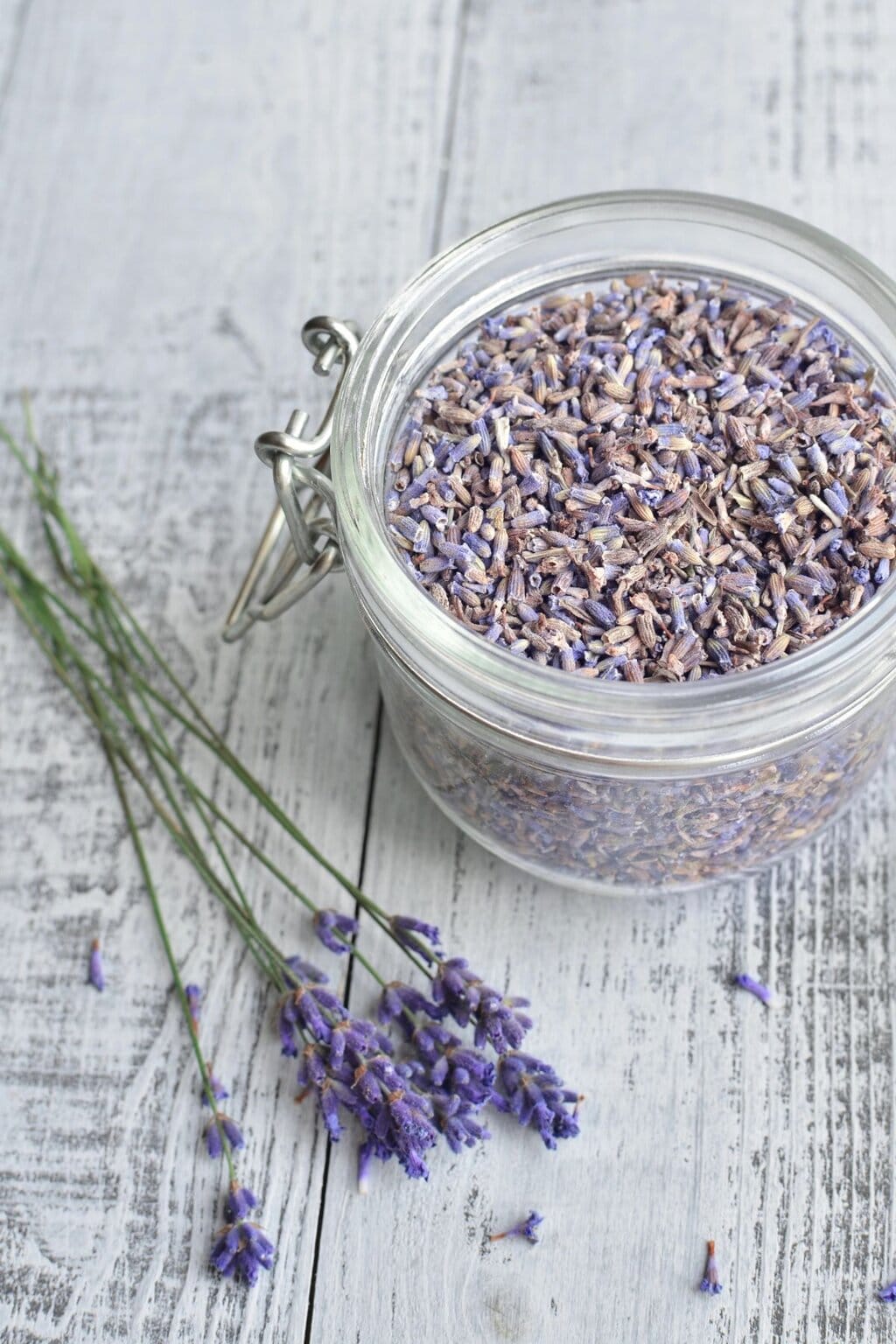
Place the dry lavender into airtight containers. A Mason jar works just fine. Store the herbs in a cool, dark, dry place.
For best flavor, use up the dried lavender within a year. Simply toss outdated herbs into the compost heap.

How to Use Dried Lavender
Lavender is one of those herbs that earns its place in the pantry several times over. Once you have a jar of dried buds on the shelf, here’s what to do with them.
In the kitchen. Dried lavender buds bring a floral, slightly sweet note to all kinds of recipes, savory and sweet alike. A little goes a long way, so start with less than you think you need. This list of sweet and savory lavender recipes is a good place to start if you’re not sure where to begin. From there, lavender honey is one of the simplest and most useful things you can make, it is good in tea, in baking, and drizzled over cheese. Lavender sugar works the same way, and lavender preserved lemons add something unexpected to salad dressings and roasted vegetables.
In baked goods. Lavender cupcakes are a reliable crowd-pleaser, and white chocolate lavender cookies are worth making at least once. Both use dried buds, and both are better than they sound to anyone who hasn’t cooked with lavender before.
In drinks. A lavender hot toddy is a simple winter drink and a good reason to keep dried lavender in the pantry past summer.
For the bath and skin. Dried lavender buds go into fizzy lavender bath salts without much fuss, and the result is genuinely soothing. Lavender is also a natural fit for homemade salves, I use it in my healing salve recipe for exactly that reason.
For sachets and sleep. Fill a small cloth bag with dried lavender buds and tuck it into a drawer or a pillowcase. It’s one of the oldest uses for the herb and still one of the best. No recipe needed.
For gifts. If you grow enough lavender to dry in any real quantity, you’ll have more than enough to give away. This list of lavender gift ideas has plenty of options that come together without much effort.
oooh I learned something new! Lavender Pesto! We’re just about ready to plant our Fall/Winter Garden and lavender is always part of the bed. (btw thanks for nice card you sent!)
Thank you for all the new ways to use lavender. I have some dry flowers I was going to plant in pots in spring. Now I’m going to eat them too.
Enjoy!
Is it safe to eat any lavender species?
Yes, though admittedly some taste better than others.
I recently made lavender lemon ice cream! it was subtle but very good!
Yum!