
I may earn a commission if you click on links in this post and make a purchase.
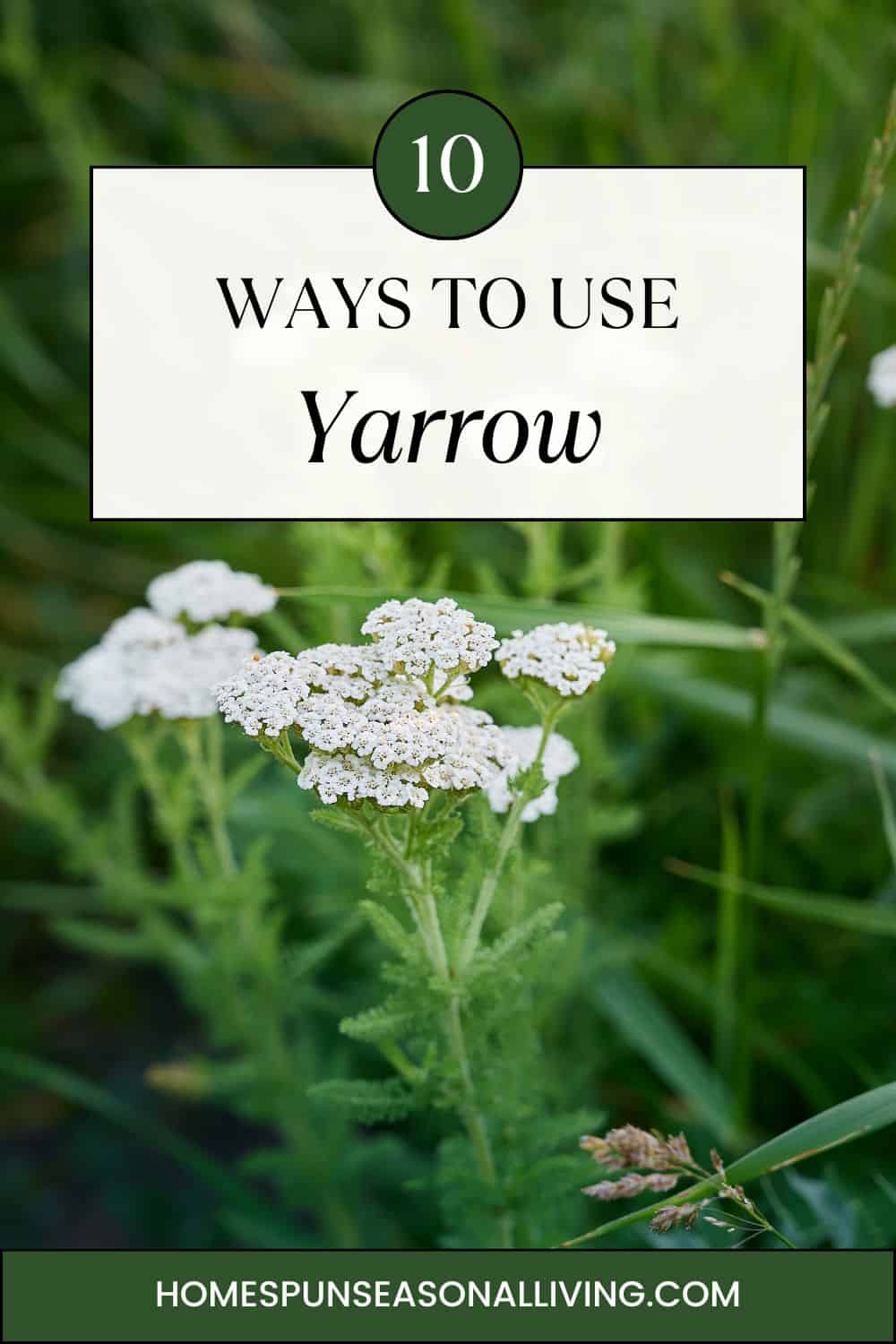
Yarrow (Achillea millefolium) grows wild nearly everywhere, roadsides, field edges, old pastures, sometimes right in the yard. I can often harvest it growing wild right in my back yard but there are times when I pick on walks in the woods. I dry it for use in salves and tea mostly. It’s a flexible herb to keep on hand.
Harvest the leaves and flowers in summer while they’re blooming, use some fresh and dry the rest for the months ahead. As with any wild plant, always be completely sure of your identification before harvesting.
Yarrow for External Use
1) Reducing swelling and bruising. Yarrow’s astringent properties help bring down swelling on bruises and minor external wounds. Make a poultice from the fresh leaves directly on the area, or steep a strong tea from dried yarrow, soak a clean rag in it, and apply that instead.
2) Stopping minor bleeding. Dry the leaves and grind them into a fine powder, then apply directly to small cuts and scrapes to help slow the bleeding. This is the same first-aid use yarrow has been known for going back centuries.
3) Toning and tightening skin. A cooled cup of yarrow tea works as a simple facial astringent, helping clean and tighten pores. For more stubborn skin concerns, infuse yarrow in witch hazel instead and apply with a cotton ball.
4) Easing a fever. A warm bath with a few cups of strong yarrow tea added to the water can help take the edge off a fever, especially alongside rest and fluids.
5) Healing salve for skin. Infuse oil with yarrow flowers and leaves, then use the oil on its own or turn it into a balm for irritated, dry, or damaged skin. This is the same method I use for my own general healing salve, just with yarrow added to the mix.
6) Supporting varicose veins. A yarrow tincture, or yarrow-infused witch hazel, can be spritzed over varicose veins as part of a regular routine to help tone the area and support circulation.
Yarrow for Internal Use
7) Tea for fevers and colds. Yarrow tea induces sweating, which can help support the body through a fever. To make it, steep 1 tablespoon fresh leaves (1 teaspoon dried) in 1 cup of boiling water for 4 to 5 minutes. Sweeten with honey if needed, since yarrow has a noticeably bitter flavor on its own.
8) Tincture for digestion. A yarrow tincture can offer some support for sluggish or weak digestion. Take a small dose, about 1/2 to 1 teaspoon, in a little water as needed.
9) Easing heavy menstrual flow and cramping. Yarrow tea or tincture has traditionally been used to help ease excessive menstrual bleeding and reduce cramping.
10) Supporting healthy blood pressure and circulation. Yarrow has a long history of traditional use for supporting heart and blood vessel health, including blood pressure.
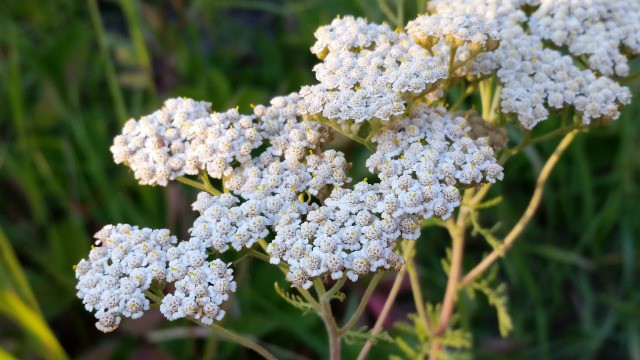
Beyond the medicine cabinet, yarrow earns a spot in the garden too. It draws in pollinators, and as it breaks down it can act as a mild natural fertilizer for the soil around it. If you’re planning out a medicinal herb garden of your own, yarrow is one of the easiest plants to include, whether grown on purpose or simply left alone where it volunteers.
Precautions: Yarrow should not be used by pregnant women. It may cause a reaction in people with allergies to plants in the aster family. Always check with a trained healthcare professional before using yarrow, especially alongside other medications.
Yarrow is ready to harvest from early summer through fall, so there’s a long window to gather what you need, dry some for later, and put this plant’s long history of use to work in your own home.
If the rhythm of harvesting and drying what the season offers is something you’d like more of, The Seasonal Whisper is a quarterly letter with seasonal recipes, simple living encouragement, and a bit of handmade fun delivered right to your mailbox.
I love yarrow! I use it in my healing salve which I sell at farmers’ market, and I love it for providing forage for my bees! Thanks for sharing!
How do you make your healing salve
My general healing salve method is here: https://homespunseasonalliving.com/how-to-make-healing-salve/
should I only use the white ones? I have pink ones in my yard. Thanks
You can use any color – they all have medicinal properties.
The color does make a difference, white yarrow is best, colored yarrow is genetically modified.
Hybrid isn’t the same as genetically modified, to my knowledge there is no GMO yarrow (feel free to cite a source / give me a link if you know otherwise). White might be best but that doesn’t mean the others are unusable.
I was given a yarrow plant and wasn’t really sure what to do with it. Thanks for all the tips!
Do i use the leaves or the flowers? Can i also use the stems and root?
Use the leaves and flowers, the stems and roots aren’t necessary for these preparations.
The suggestions are great but you say to use the flowers, what are the flowers good for rather than the leaves?
You can use the flowers and leaves.
I heard that the root of yarrow it the most potent healing part
Do you have a source for that statement? A book or teaching I can reference?
Is this safe to ingest? My taste buds really reject the awful bitter taste no matter how much sugar I add to it. Has anyone actually tried drink yarrow tea, was it bitter or is it just me?
It is very bitter. It is safe to ingest for most people – obviously some folks have allergies, pregnant women should avoid. Depending on what you’re using it for … maybe there’s a better choice for you if it’s too bitter.
@Mr. TeaTime, try lemon for the bitter and sugar to sweeten. I use lemons in green juices becauseI don’t like the taste. Lemon cuts that green butter flavor.
I added honey and it really ease the bitterness. It made it drinkable for me.
My husband drinks yarrow tea and mixes it with peppermint tea to combat the bitter taste some…and lots of sweetener.
Yarrow leaves dried can be used in the place of tarragon. I use yarrow, onions,garlic, cumin in cooked beans.
I love yarrow, I didn’t hv much info about it.
I didn’t know that yarrow cn be made as a cup of tea. Thank you for this fruitful information about usage of Yarrow.
I agree about the weak digestion. I am a senior on lots of meds and needless to say have a weak digestive system. I keep yarrow tincture on hand for those moments I need an extra helping hand . It works.