I may earn a commission if you click on links in this post and make a purchase.
In a world that constantly urges us to go faster, be more efficient, and get things done with minimal effort, there’s something quietly radical about choosing the long way.
Working with our hands, taking time to create something over a period of long hours is an important part of a simple life and something that can be quite joyful.
Our modern lifestyles tell us that our days and tasks should be easy and fast. Everything should be instant and convenient. We have so many options and while those options are fast they often only add to our to-do list and rob us of the joys of simply living.
The Joy of Slow Work
Our culture often associates worth with speed. Fast food, fast fashion, quick fixes — convenience is king. And yet, when we step back and intentionally choose work that takes time, we’re making space for something deeper: satisfaction, pride, and meaning.
For generations before us, slow work wasn’t a luxury – it was survival. Making things by hand, growing food, repairing clothing were essential acts. Now, these same actions can be tools for reconnection to ourselves, to the earth, and to a life that feels less frantic and much more authentic.
Not the Same as Difficult
We sometimes have the mistaken belief that time consuming projects equal difficult projects. And while there is no doubt that can sometimes be true, it is not always true.
Baking bread from scratch takes hours. It is not difficult. Making sauerkraut takes days but it is not difficult nor is the actual hands-on time all that great.
Digging a garden by hand is physically demanding and difficult while also being slow work.
It’s important to stop thinking that just because something takes time that it is difficult and better left to professionals or to be picked up at the grocery store.
There are times and places for both things, balance is important, but separating the concepts of time consuming and difficulty is important.

Why to Take Your Time
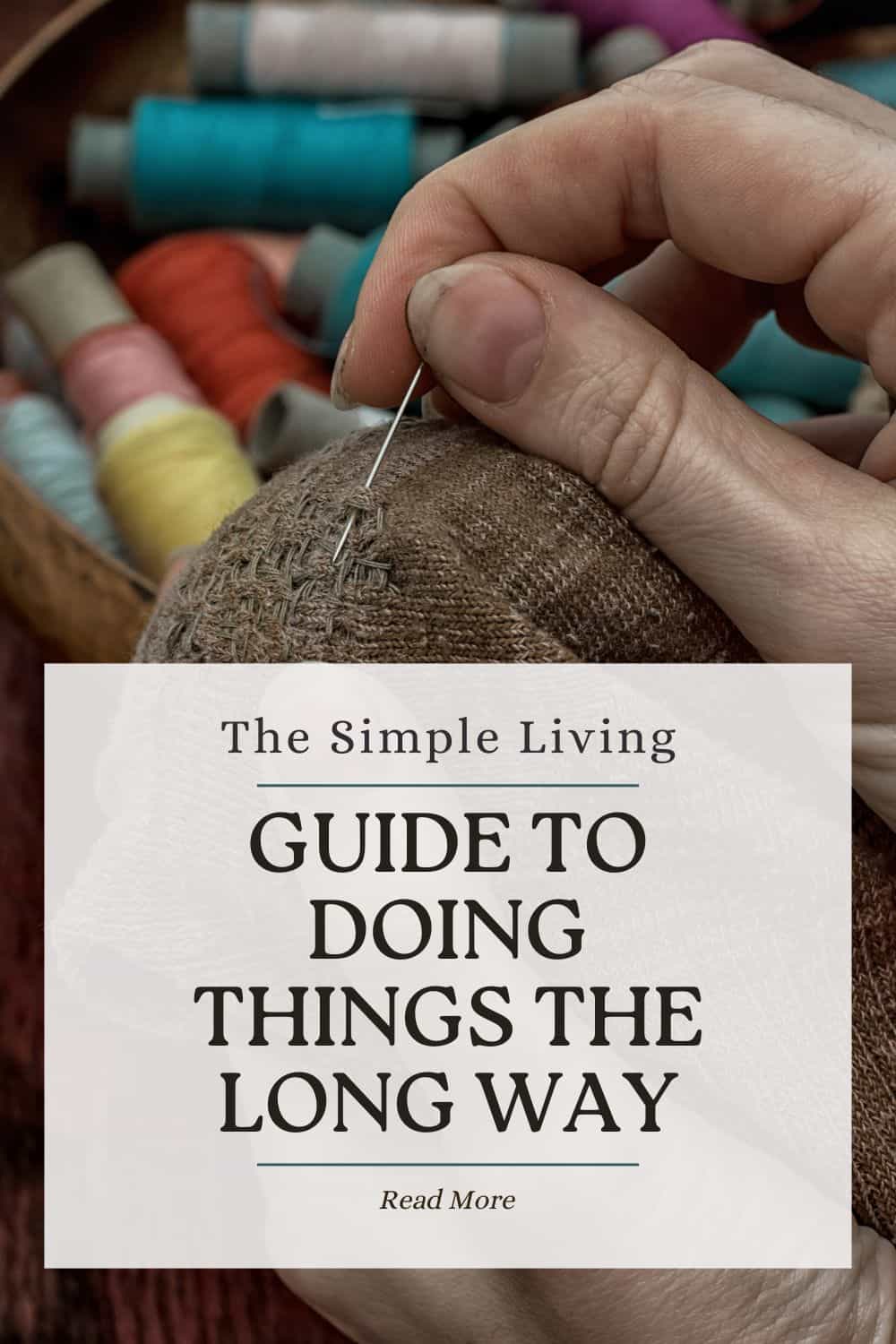
Slow work isn’t just about the end result. It’s about the process. Stirring a pot of soup on the stove, sewing a patch on a favorite shirt, writing a letter by hand — these acts slow us down, anchor us in the present, and remind us that life doesn’t need to be rushed.
They also reframe how we view “stuff.” When we understand the effort behind homemade things, we’re more likely to value them. That shift in perspective can help us resist the endless pull of cheap, disposable goods and instead cultivate a home and a life rooted in intention.
It might just help us understand what is necessary and important without blindly following trends that take so much rather than add to our lives.
Work Does Not Equal Drudgery
There’s a common saying: “If it was fun, it wouldn’t be called work.” But maybe we need to rethink that. The time-consuming work I’m talking about isn’t about chores or obligations. It’s about choosing meaningful tasks that feel nourishing.
Maybe for you, that’s baking. Or gardening. Or spinning wool. Whatever your version looks like, the important part is that it feels purposeful, joyful not punishing.
And if something just doesn’t check those boxes? Don’t do it. This isn’t about adding more pressure or overwhelm. It’s about choosing work that brings comfort, connection, and maybe even a little delight.
Convenience & Free Time
We all enjoy our free and leisure time. There’s nothing at all wrong about having it – in fact we should try to build more of it into our lives in my opinion.
However, let’s try to make sure that free time is of a substance and quality that rejuvenates our souls and connects us to people we love.
Let’s also make sure that the convenience actually gives us free time because sometimes it can actually be a burden. What often ends up happening is that the shortcut for convenience in this one task ends up making us feel like we need to spend the additional time working or doing things that don’t always provide joy.

Is the convenient thing nourishing to body and soul? Homemade soup isn’t that difficult or time-consuming really but does take longer than opening a can. Is the canned stuff nourishing? Or even all that tasty?
We can compromise on convenient and slow living.
As an example, we can buy wood from a local person who earns money by cutting down trees. We can then use an electric or gas-powered splitter to cut into pieces for the woodstove. The stacking and moving into the house needs to be done by hand. So there’s a decent compromise that allows us to have some free-time and support our community at the same time.

Respecting Personal Limits
Everyone has their own difficulty level and tolerance. Sometimes physical limitations mean standing for long periods is difficult or impossible. Caring for small children, sick spouses, ailing parents, etc. all mean we have individual levels of time consuming that can be withstood.
Do what works for you and make no apologies or excuses for it. This is not an exercise in judgment or trying to be perfect or keep up with someone else.
If anything this call to do the time consuming work is about slowing down and accepting that no one can do it all. And no one has to do it perfectly, remember to find compromises.
This kind of work and dedication is about simplifying life to a manageable and joyful level. These kinds of tasks should provide joy and purpose in lives that we all too often just move through without noticing.
Not Old-Fashioned or Traditional
There’s this weird idea that doing things manually is beneath us or behind the times. That doing things by hand is old-fashioned or about preserving tradition.
While these projects can sometimes be old-fashioned and about preserving tradition, those aren’t the only reasons to do them.
Rather doing this kind of work is about connecting to ourselves, our land, our homes in a way that mass production doesn’t provide.
Work isn’t beneath us – work is often what provides joy and purpose in life. And in this particular case, we are talking very much about doing work that we enjoy and that isn’t drudgery.
How to Get Started
We modern folks are generally out of practice doing things by hand. And the only way to get practice is to, well, practice.
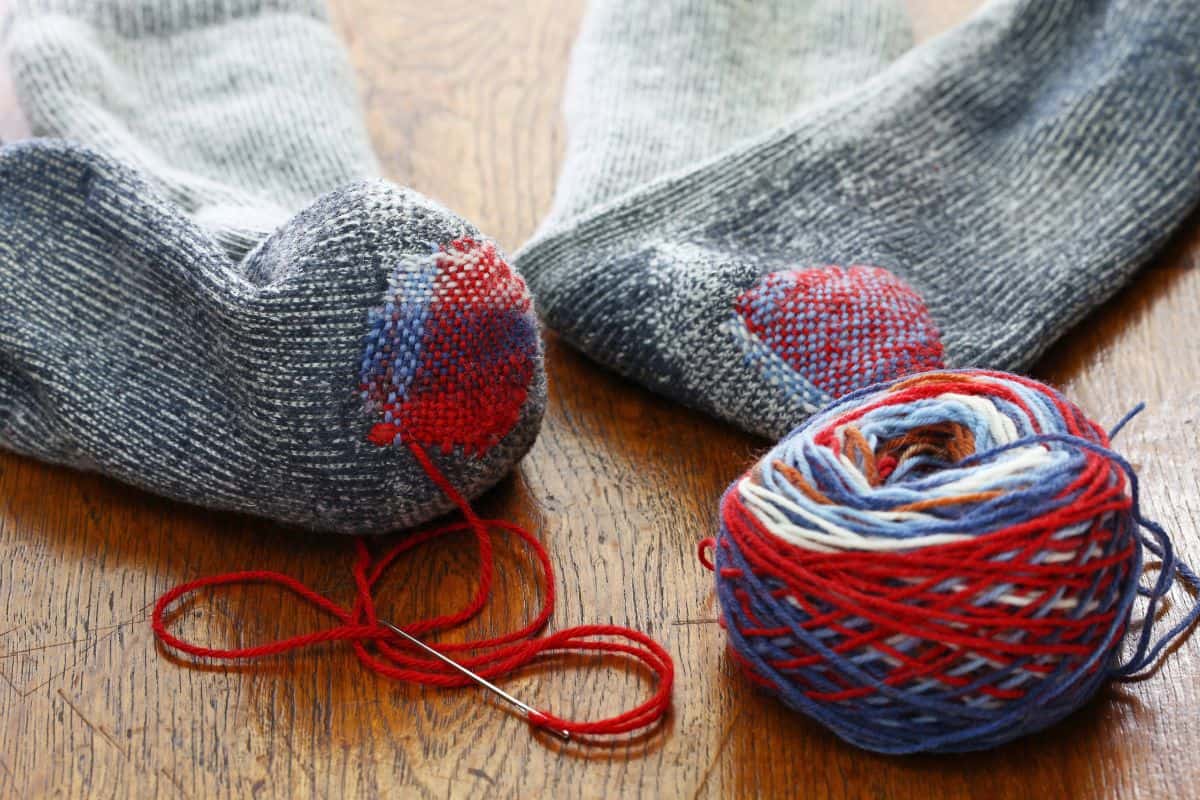
Start simple: Plan for one meal a week cooked completely from scratch. Mend rather than toss the torn jeans. Make your bone broth. Write an actual letter to someone you love.
Pick something and simply get started. Remember no one does something perfectly on the first try. The first try is likely to be messy and disorganized. That’s okay – everything gets neater and easier the more times it is repeated.
The idea is just to simply start. And to start small. Add things if and when the first thing becomes so part of the routine that adding something new feels easy and doable. If that doesn’t happen, that’s okay too.
Don’t add things just to keep busy or because of some weird feeling of obligation. This will only create overwhelm and stress, the exact things we’re trying to remove.
I just love this post! You wrote: “What often ends up happening is that the shortcut for convenience in this one task ends up making us feel like we need to spend the additional time working or doing things that don’t always provide joy.” YES. Growing up we were taught to always be doing – and often that meant never taking time to just go slowly. If we had “extra time,” we should fill it with something that needed to be done – and often that was more work or a task that wasn’t enjoyable. Not that people don’t also need to do the “un-fun” as necessary, but sometimes you just need to slow down and do things differently to not burn out. It’s taken me about 30 years to finally say, you know, I cannot do it all, and I don’t want to do it all.
So I cook soup from scratch, I garden, I put up food, I hand-write letters when I can, and I stopped beating myself up for not being able to accomplish everything.
Thank you for sharing your wisdom! Have a wonderful day!
I’m so glad you enjoyed this post. And, of course, we still have to ‘un-fun’ work, toilets need cleaned, floors scrubbed, etc. but I’ve had to fight that constant work feeling too. I like to my hands to be busy, admittedly, and thankfully knitting is a fun way to do that. Thanks so much for taking the time to read & comment.
Wow, you hit the nail squarely on the head! That was beautifully written. I find myself almost compulsively drawn into the homemade, handmade lifestyle and at times wonder if I’m crazy. I do find joy in the work of my hands. Your post brought a few bible verses to mind, a smile to my face, and encouragement to keep on dong the slow work that shuns convenience and creates health for my family. Thanks for sharing!
Thank you. I’m so glad this was encouraging for you!
This was a great reminder that slowing down is OK and really a necessary part of living a less-stressed life. I have encountered that attitude when I share with people some of the things I like to do in my free time that take time. They sometimes give me that look that says “why would you make soap (or whatever) when you can just go buy it?” Sort of puzzled, and sort of pitying. Like most everyone, I’ve spent my life losing my creative spark in the pursuit of a living. It’s time we all reclaim those things we like to do the most. Thanks.
Thanks so much for taking the time to comment, I’m so glad this post was a good reminder for you.
Thank you so much for this post. It reaffirmed my love for doing some of my favorite things: sewing, knitting, ironing (yes, I love to iron). Whenever I’m feeling stressed, I make a point of slowing down and doing what I love. It brings a sense of peace and balance to my life. Your insights are very much appreciated. Have a lovely day.
I’m so glad you enjoyed the post. Thanks so much for taking the time to read & comment.
Thank you so much for the information and guidance to make simple changes in our lives. I am working on changes in my own life and it has been a long process. When I get a new idea or plan, I typically want things to change quickly but it then becomes a chore. You have given me the “permission” to let it breathe and to move slowly. Thanks.