I may earn a commission if you click on links in this post and make a purchase.
Have you ever stared at a patch of weeds in your garden and wondered what healing properties might be hiding there? That curiosity—mixed with a bit of research and a lot of heart—is exactly what fuels the homesteading herbalist.
In today’s world, living a simple, seasonal lifestyle comes with an incredible gift: access to a vast array of resources. We don’t have to start from scratch. We can learn from those who came before us and from those walking this path alongside us now. For the homesteading herbalist, these tools and connections are invaluable.
Let’s look at a few of the most helpful resources to support your herbal journey – books, online communities, and even a few places to get seeds into your soil.
Who Is the Homesteading Herbalist?
The homesteading herbalist isn’t always the person with a certification on the wall. Often, it’s the one who’s caring for their family with teas, salves, and tinctures from their own kitchen. It’s the gardener who can’t help but tug every odd-looking weed to see what it might be used for. It’s the home cook who knows that what’s in the spice rack can be used for more than flavor.
This kind of herbalist needs a good, reliable toolbox—and that starts with books.
Favorite Books for the Home Herbalist
A small library can be a powerful ally in your herbal practice. These are the dog-eared, well-loved books that rarely make it back to the shelf because they’re always in use.
The Herbal Kitchen by Kami McBride – This book brings the spice rack to life. It’s full of practical, approachable ways to use common culinary herbs for health and healing. It’s perfect for beginners and seasoned herbalists alike who want to make the most of everyday ingredients.
The Big Book of Backyard Medicine by Julie Bruton-Seal – Ideal for foragers, this book offers plant ID help, historical uses, and medicine-making instructions. It’s especially handy for figuring out what to do with those “weeds” taking over your backyard.
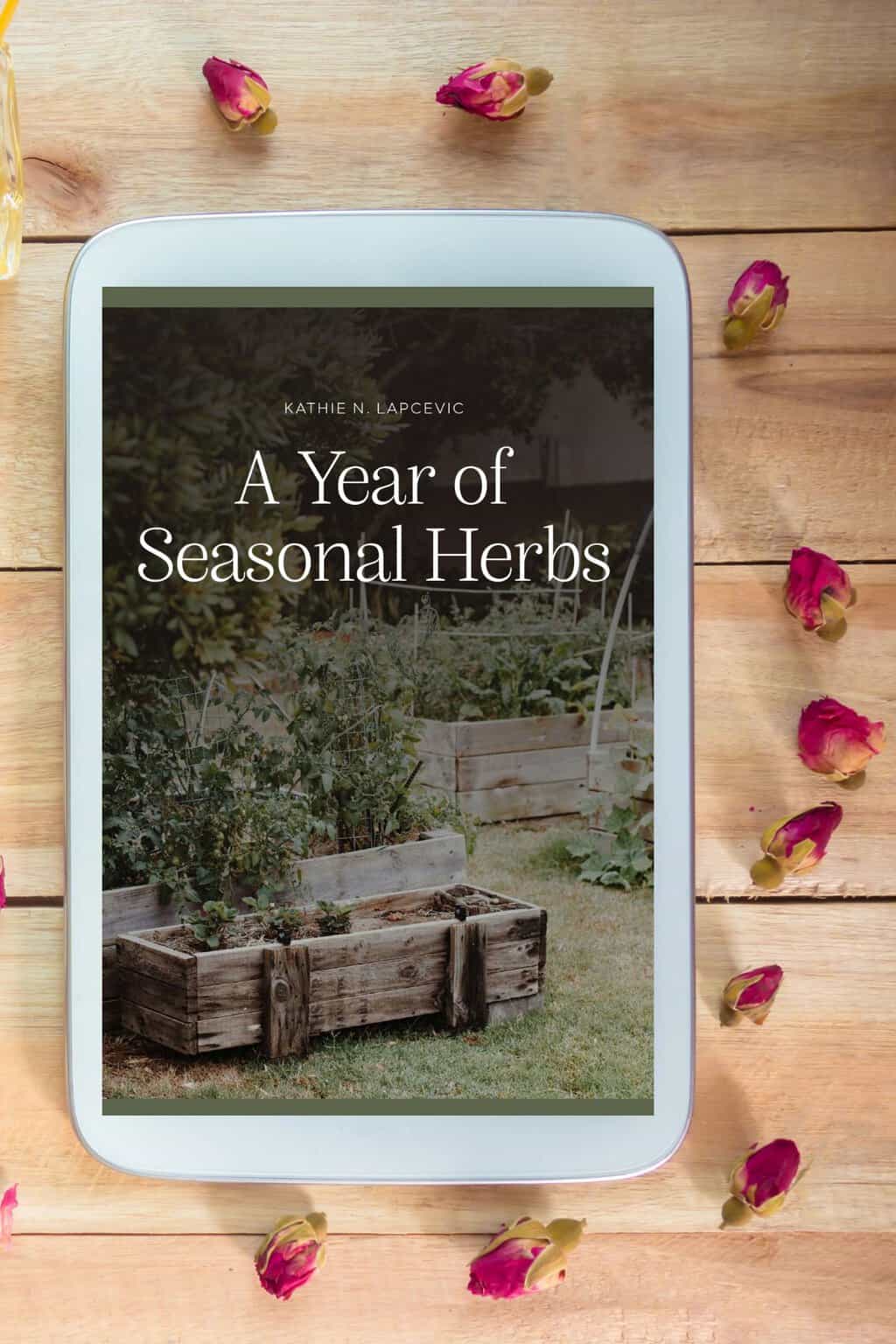
A Year of Seasonal Herbs by Kathie N. Lapcevic – This e-book covers herbs in their seasons so that you can make the most of each thing as they are best from the earth for your family’s needs.
The Big Book of Handmade Products by Jan Berry – Use all those herbs to make salves, balms, and more with this easy to follow guide to keep your skin, lips, hair and more feeling and looking good!
Herbal Recipes for Vibrant Health by Rosemary Gladstar – If you’re only going to have one book, this might be it. Full of recipes, daily wellness tips, and guidance, it’s a trusted go-to for many herbalists, myself included.
Don’t forget to check out book sales and thrift shops for older, used books that might contain a wealth of information for a frugal price.
Learning Beyond the Books
Reading is only one part of the herbal journey. Community and continued learning help bring the written word to life.
The Herbarium – An online membership that offers plant monographs, how-to guides, and a vibrant community of fellow herbalists. It’s like having a library and study group right at your fingertips. It’s from the folks of The Herbal Academy who also put out amazing e-courses to help you make the most of your herbs.
Growing Your Own Apothecary
While foraging is a wonderful skill, sometimes you want (or need) to grow specific herbs. That’s where a reliable seed source is essential.
Strictly Medicinal Seeds – Offering medicinal herb seeds for nearly every climate, their catalogs are full of useful growing information. It’s a wonderful resource for planning and planting your own herbal garden.
Closing Thoughts
You don’t have to be a professional herbalist to care deeply for your loved ones using plants. With a few good books, a curious mind, and a couple of seeds in the ground, you’re well on your way.
Remember, start where you are, use what you have, and build your practice slowly. Trust your instincts, lean into your learning, and let the plants guide you.
My favorite herbal resource is the wild forest lands right outside my back door. Honestly, books and classes and seed catalogs are fine in winter, but actually getting out and seeing the plants and watching them grow, smelling them, noting when to harvest them, making the medicine. That experience goes way past books.
Another herbal treasure trove is Richter’s Herbs in Ontario. Their seed catalogue has so much info about hardiness zones and herbal actions. (Free on their website). I have it in the same place as my reference books, so I can see if herbs will grow for me.
I’m excited about learning from you
Don’t know if you own the picture, or if it’s a free stock photo, but it looks like this blog cropped it and used it. Just letting you know in case that’s not cool. http://104homestead.com/backyard-foraging/
I actually wrote that post as a contributing author for the 104 Homestead. It is my photo. I appreciate, so very much, you telling me though so often folks do steal and it’s not at all nice.