
I may earn a commission if you click on links in this post and make a purchase.
The lilacs in my yard are one of my favorite things about spring. For a few weeks every year it fills the whole corner of the yard with that unmistakable scent, and I’ve learned to make the most of every bloom before they’re gone. Because yes — lilacs are completely edible, and they’re worth bringing into your kitchen while you have them.
The flavor is delicate and floral, a little sweet, faintly perfumed.The flavor is not as strong as its scent, subtle enough to let other ingredients shine but distinctive enough to make something feel genuinely special. If you’ve never cooked with them before, this is a good spring to start.
A Note Before You Pick
Use only unsprayed lilacs — nothing that’s been treated with pesticides or herbicides. If you’re foraging from a neighbor’s yard or a public space, it’s worth asking or being certain about the
spray history.
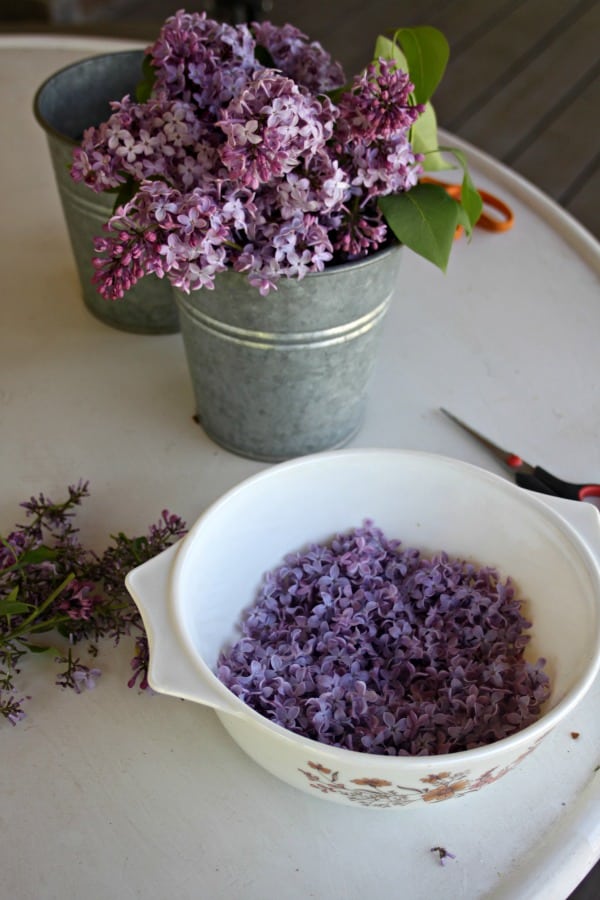
To prep: rinse the blooms under cool running water and give them a spin in the salad spinner to shake off the excess — or check out my post on cleaning and washing foraged herbs for a more thorough method. Then strip the individual florets from the stem — scissors over a bowl makes this easy. You want the tender blossoms, not the tough woody stems. It’s a bit of a process, but it’s a nice way to spend a slow spring afternoon on the porch.
Drinking Lilacs
Lilac Simple Syrup: Simmer 1 cup water with 1 cup sugar for about 10 minutes. Take it off the heat, stir in 1 cup of lilac blossoms, cover, and let steep for 20 minutes. Strain and refrigerate. Use it to sweeten iced tea, lemonade, or homemade Italian sodas. It keeps in the fridge for a couple of weeks.
Lilac Cordial: Cover blossoms with vodka and tuck the jar into a dark cupboard for 2 to 4 weeks. Strain. The alcohol will have turned a soft lavender. Use in cocktails or package into pretty bottles for gifts.
Lilac Wine: If you homebrew, lilacs make a lovely wine. Light, floral, and genuinely pretty in the glass.
Preserving Lilacs
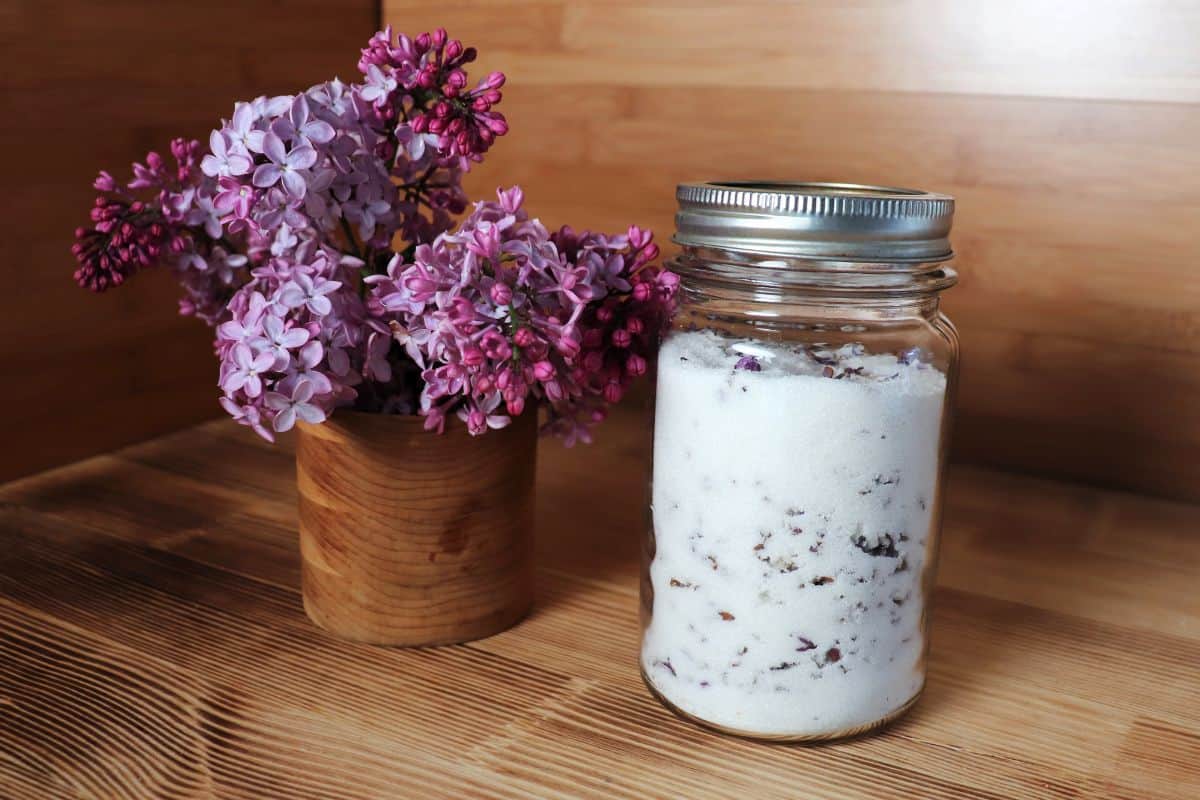
Lilac Sugar: Infusing lilacs into sugar is one of the simplest ways to capture the flavor and use it all season long in baking, drinks, and more
Lilac Floral Vinegar: Infuse blossoms into white wine vinegar for a lightly floral vinegar that’s lovely in salad dressings and especially delightful on a strawberry and spinach salad.
Candied Lilac Blossoms: Brush individual blossoms with egg white, dust with fine sugar, and let them dry on a rack. They take a little patience but make beautiful cake decorations and are worth the effort at least once.
Lilac Infused Honey: Floral, golden, and quietly lovely — lilac infused honey is one of those things that makes everything it touches feel a little more special. Drizzle it over cheese, stir into tea, or use anywhere you want that soft floral note.
Lilac Jelly: Beautiful color, delicate flavor. Make a batch or two now and you’ll have something lovely to give as gifts come the holidays.
Eating Lilacs
Lilacs have a natural affinity for sweets, though a handful tossed into a salad is worth trying too. The flavor is delicate, so simple preparations tend to work best.
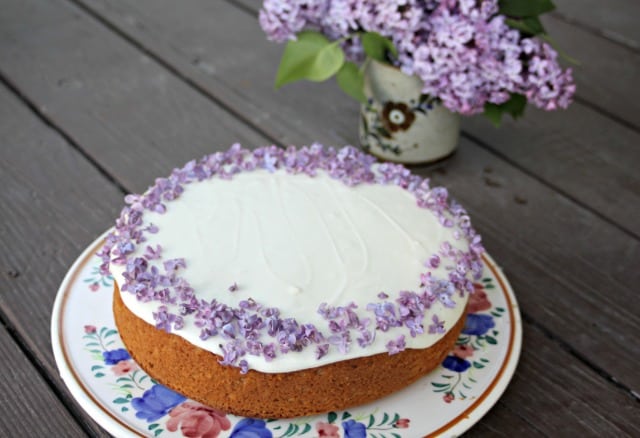
Lilac Honey Cake: The blossoms fold beautifully into cake batter and make for simple, pretty decorating too.
Lilac Cookies: Cornmeal cookies are a particularly good match — the crunch plays nicely against the delicate floral flavor.
Lilac Muffins: A simple, tender bake that lets the floral flavor come through without fuss and makes for a great grab-and-go breakfast.
Lilac Rice Pudding: Creamy and comforting with just enough floral sweetness to make it feel like a proper spring dessert.
Lilac Cream Tarts: Individual tarts work beautifully for a spring gathering or a simple dessert that looks like more effort than it was.
Lilac Pavlova: Lilacs and blackberries together — fluffy, a little dramatic, and worth making at least once while the blooms are at their peak.
The lilac season is short. A few weeks, maybe less if the weather turns warm fast. Pick early, use what you have, and let the season do the work.
If you love this kind of simple seasonal cooking, The Seasonal Whisper might be just your thing — a quarterly letter by mail with recipes, ideas, and a little encouragement to slow down and pay attention to the season
Kathie
Love your news letters, have been getting them for about a year now. Have made many of your recipes. oils and lip balms. Going to try the Lilacs one.
they smell to go to eat,,, lol..
In Peace Dee
Thank you so much for saying so! I avoided eating lilacs for a long time because I worried that their scent and flavor would be too overpowering in food but I don’t find that to be true. Enjoy those lilacs.
Hello Kathie,
I love this post, I had no idea you could eat lilac. We have a white and a purple bush. As soon as it stops raining, I’ll pick some to try the recipes.
Thank you for all this inspiration
Enjoy those lilacs!
Wonderful ideas! ?
Lilac Fritters! Wash a stem full of blooms, dip in pancake batter and pan fry!
What a tasty idea!
I’m so glad I’m not the only one who does this!
Oh nice! I’m gonna add blackberries and make for my partners bday snack.
Have you tried drying the blossoms to use in an oil infusion? Also curious if they freeze well? Would be nice to use them throughout the year.
I haven’t tried an oil infusion with Lilacs, nor have I tried to freeze them, though I’m sure you could. I think it’d make a delightful compound butter too…
I have dried and infused them, but the aroma doesn’t transfer well and the infusion had a dirty feet smell. I had heard this was the case with Lilacs, but wanted to try anyway. There is Lilac Absolute you can buy that would probably lend the most “real” Lilac aroma to an infusion or lotion. https://www.stillpointaromatics.com/lilac-essential-oil-CO2-Syringa-vulgaris-extract-aromatherapy
Charlie, we freeze them in coconut water to make popsicles. We have also put them in ice cube trays to add to herbal sweet tea as well.
To capture the fragrance you must make an enfleurage(gooogle if not familiar).
Interesting. I never knew you could eat them. The garden of our new home is currently bursting with lilacs so even with a crop to make some goodies I shall still have plenty in the garden to enjoy :)
Oh very fun – enjoy!
I always make a lemon balm cake with lilac frosting . This year tried cream cheese and I haven’t perfected the texture but it doesn’t matter bc it was so good! Also I make syrups and add to sweet cream ice cream. Decorate w candied lilacs if ya feel like it. When I used to drink I loved the syrup w vodka and seltzer and lime or lemon. I also want to make a sorbet w blueberries this year !
I can’t wait to try these,thank you for sharing
We purchased our home two years ago and it has a lilac bush on the edge of the yard! I don’t know the history of the yard, but I assume the grass (at the very least) been treated with weed & feed, pesticides, etc. If we haven’t treated the bush with these things, are the blossoms now safe to consume? How long does a plant have to go untreated to be safe to consume? Thanks!
I personally would think 2 years is long enough but I honestly can’t say with any kind of scientific accuracy. Maybe ask a local extension office?
Thank you for this post, I love the smell of lilac and now I can preserve it for a long winter.
Enjoy!